
Do Ants Get Worse After Treatment?

Updated: May 17
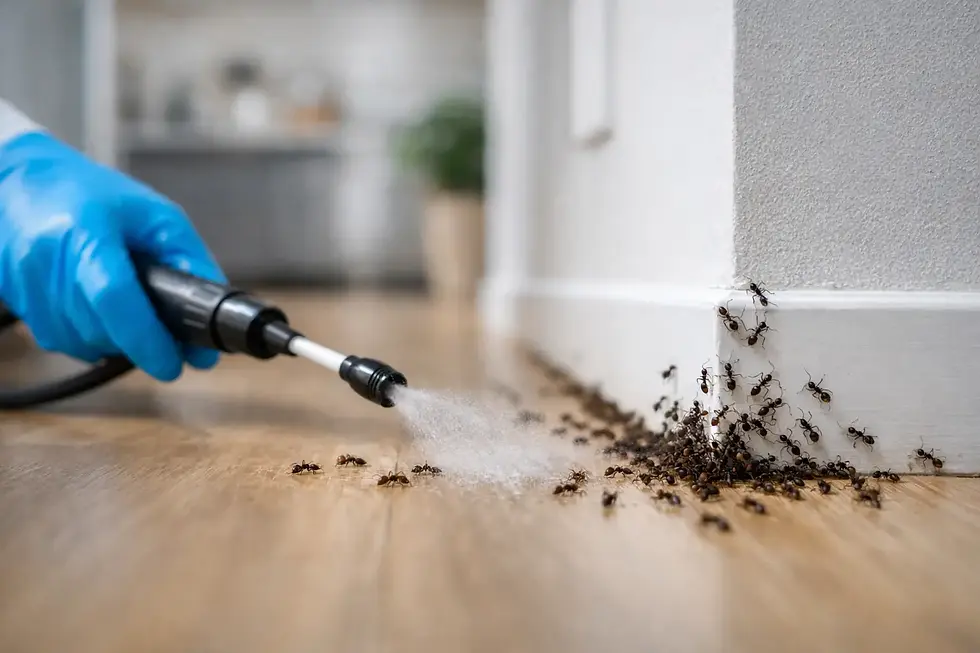
You’ve had the place treated then suddenly there seems to be more ants on the kitchen bench, skirting boards or patio than there were before. If you’re wondering do ants get worse after treatment, the short answer is yes - sometimes they do, at least for a few days. That doesn’t always mean the treatment has failed. In many cases, it means it’s doing exactly what it should.
Ant control rarely works like an instant knockdown. Ants live in organised colonies and the ones you see are only a small part of the problem. A proper treatment is usually designed to affect the nest, not just the workers marching across the floor. That process can make ant activity more noticeable before it settles down.
Why ants can look worse after treatment.
When ants come into contact with a treatment, especially bait-based products or non-repellent residual sprays, the goal is often for them to keep moving long enough to carry the active ingredient back to the colony. That is good for long-term control, but it can create the impression that the infestation has suddenly exploded.
You may notice more ants emerging from cracks, wall gaps, paving joints or garden edges. That often happens because the colony has been disturbed. Worker ants start relocating food, brood or even parts of the nest. Instead of staying hidden, they become more active for a short period.
This is one reason DIY treatments can be frustrating. A supermarket spray might kill the ants you can see but it can also scatter the colony and push the problem deeper into walls, under concrete or into the yard. Professional treatment is usually more strategic. It aims to reduce the colony, not just clear a visible trail for a day or two.
How long does the spike in ant activity last?
In most cases, increased ant activity after treatment should start easing within a few days. Depending on the species, nest size and treatment method, it can take one to two weeks to see a clear drop-off. Some infestations resolve faster. Others need a little more time.
That timeline matters because ant colonies are not all the same. A small black ant nest near the back door behaves differently from a large coastal brown ant colony spread through garden beds and wall cavities. Weather also plays a part. Warm conditions, recent rain and dry spells can all change how ants move and forage around homes in Maitland, Newcastle and the Hunter Valley.
If the treatment involved baiting, patience is especially important. Baits rely on ants feeding and sharing the product inside the colony. If they are still taking the bait, that usually means the process is underway.
Do ants get worse after treatment with sprays?
Sometimes, yes. But it depends on the spray.
A repellent spray can make ants scatter and search for a new route. That may look like more ants, when really it is the same colony reacting to the chemical barrier. A non-repellent product works differently. Ants pass through it without immediately avoiding it, which improves the chance of transfer through the nest.
This is where the right product choice matters. The wrong approach can create short-term relief and long-term frustration. The right one may require a bit more time, but it generally delivers a better result.
Signs the treatment is working
The first thing to watch is the pattern, not just the number. Ant trails may become messy or less direct. You might see ants wandering rather than moving in a strong line. That often means their communication has been disrupted.
You may also notice activity shifting to one or two entry points instead of several. That can happen as surviving workers try to reorganise. Over time, the total number should drop.
Another good sign is when the busiest spots become quiet, even if a few ants still appear elsewhere. Ant control is often a step-by-step reduction, not a switch being flicked off all at once.
When increased ant activity is not normal
A short burst of movement is common. Ongoing heavy activity is not.
If you are still seeing the same or higher numbers after about two weeks, it may point to one of a few issues. The colony could be larger than first expected. There may be multiple nests on the property. The species may not be responding well to the original treatment. Or ants may be re-entering from neighbouring properties, gardens, retaining walls or shared boundaries.
Access can also be a factor. If the main nest is buried deep under a slab, inside a wall cavity or under pavers, it may take more than one treatment to bring the problem under control. That is not unusual, especially on larger blocks or older properties.
What you should do after ant treatment
The best thing you can do straight after treatment is avoid interfering with it. It is tempting to wipe out every ant you see with spray or disinfectant, but that can work against the treatment plan. If ants are carrying bait or moving through a treated zone, killing them too early can reduce the transfer back to the nest.
Try to keep treated areas as undisturbed as possible for the period advised by your pest technician. If skirting boards, external paths or entry points have been treated, avoid washing them straight away. Inside the home, basic cleaning is fine, but do not scrub the exact treatment areas unless instructed.
It also helps to reduce food competition. Keep benchtops clean, store pantry items properly, rinse recyclables and avoid leaving pet food out longer than needed. If ants have easier food sources available, they may ignore baits or continue foraging even while the colony is under pressure.
Why some properties need follow-up treatment
Ants are persistent. Around homes and small businesses, nests can be spread through lawns, garden beds, wall cavities, roof voids, under concrete and around fences. One visible trail may actually be connected to several nesting sites.
That is why follow-up treatment is sometimes part of doing the job properly. It does not always mean the first visit failed. It may simply mean the infestation was broader than it looked on day one.
This is especially true for rental properties, childcare-conscious family homes and food-related businesses where ant pressure needs to be brought down reliably and safely. A licensed and insured pest professional should be upfront about that. Clear advice matters as much as the treatment itself.
Do ants get worse after treatment in the yard too?
Yes, outdoor activity can also increase for a short time. You might notice more ants around pavers, garden edges, retaining walls, bins or the letterbox area. Outdoor nests are often the source of indoor ant problems, so treating them can stir things up briefly.
The difference is that outdoor colonies are exposed to more variables. Rain can move products. Heat can increase movement. Garden watering can affect bait placement or residual performance. That is why outdoor ant control often works best as part of a broader treatment plan rather than a quick spot spray.
When to call your pest controller back
If ant numbers are still strong after the advised timeframe, get in touch. The same applies if you start seeing new trails in different parts of the property, or if the ants have simply shifted from one room to another.
A good operator will want to know how the activity has changed since treatment. That helps determine whether the colony is collapsing, relocating or avoiding part of the treated area. In some cases, a second visit or a different product is the right move.
At Excellon Pest Control, the focus is straightforward - safe, practical treatment and honest advice about what to expect. That includes explaining when a temporary increase is normal and when it needs more attention.
Ant control works best when expectations are realistic. Sometimes things do look worse before they improve. The key is whether the activity starts trending down, not whether every ant disappears overnight. If you are seeing a short-term spike, give the treatment time to do its job. If the problem holds on, the next step should be just as practical as the first - get it checked properly and finish the job.
Ready to get rid of Ants in your home? Excellon Pest Control services Maitland, Newcastle and the Hunter Valley. Contact us today for a fast, free quote — backed by our 6 month guarantee.


Comments